

Is your office killing the mood? Make it a happy place to work



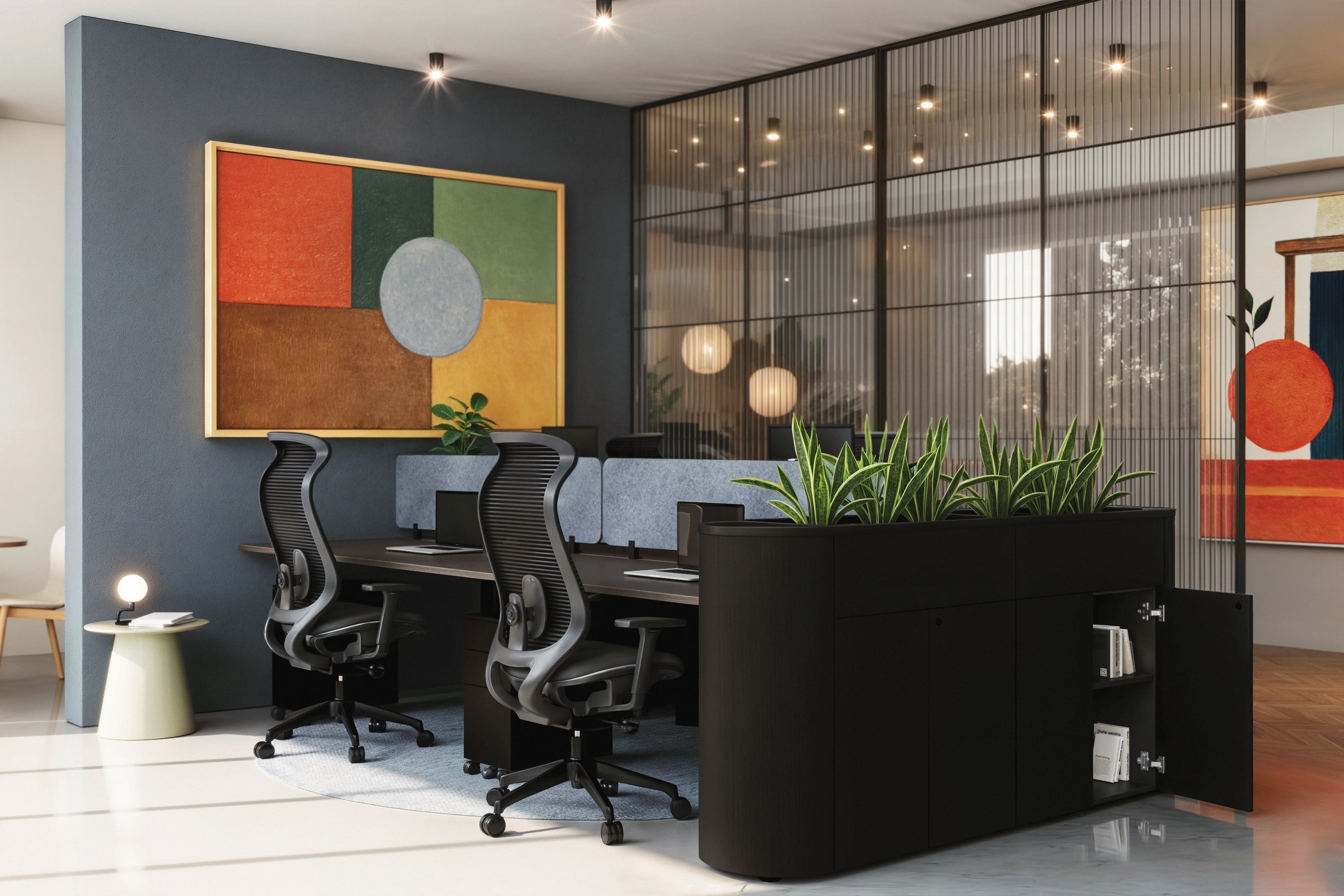
- Small workspace changes can improve comfort, focus and team energy without a full fitout.
- Better seating, desk layout, storage and acoustics reduce daily friction for busy teams.
- Practical upgrades should match space size, work patterns, budget and installation timing.
TL;DR: An office that feels flat usually has practical problems: poor seating, clutter, noise, bad layout or awkward shared spaces. SMEs can lift mood and productivity by improving comfort, movement, storage, lighting zones and team areas before committing to a full redesign. The best changes are simple to buy, easy to install and matched to how people actually work.
Direct answer
Yes, your office can affect the mood of your team. A workspace with uncomfortable chairs, crowded desks, poor storage, noise and no proper breakout areas can make people feel tired, distracted and less connected.
The fix does not always need a full renovation. Start with practical upgrades such as better office chairs, smarter desk layouts, cleaner storage, acoustic support, greenery, better meeting spaces and flexible collaboration areas.
What makes an office feel unhappy?
An unhappy office usually has one or more of these problems:
- Poor seating that causes discomfort during long workdays
- Desks that feel cramped, cluttered or badly positioned
- Too much noise from calls, meetings or shared work zones
- Not enough storage for files, bags, equipment and supplies
- Harsh lighting or dark corners that make the space feel tired
- No inviting area for informal chats, breaks or quick team check-ins
- Messy cables that make the workspace look unfinished
- Furniture that no longer matches how the team actually works
The office does not need to look like a showroom. It needs to help people do their work with fewer daily frustrations.
How small workspace changes can improve team mood
Small changes work because they remove friction. When people are comfortable, can find what they need and have enough room to focus, the office feels calmer and more useful.
| Problem | Practical fix | Best product area |
|---|---|---|
| Sore backs or poor posture | Upgrade seating with adjustable support | ergonomic chairs |
| Crowded desks | Replan desk spacing or use compact desks | office desks |
| Noisy open areas | Add dividers or acoustic panels | office partitions |
| Messy workstations | Add drawers, cupboards and shelving | office storage |
| Awkward screen height | Add monitor support | monitor arms |
| Messy power cables | Add cable and power management | power and data management |
| Weak collaboration areas | Add lounges, tables or whiteboards | sofas and collaborative lounges |
Where should you start if the office feels flat?
Start with the changes your team feels every day.
-
Check seating first
A chair is not just furniture. It affects comfort, focus and energy across the whole day. Replace broken, sagging or non-adjustable chairs before spending money on decorative changes. -
Fix desk spacing
People need enough surface area for screens, laptops, notebooks and personal items. For growing teams, office workstations can make better use of floor space than random individual desks. -
Clear the clutter
Visual mess makes a small office feel busier than it is. Use desk drawers, cupboards and filing cabinets to keep shared areas clean. -
Reduce noise pressure
Open offices need quiet zones. desk partitions, acoustic panels and meeting areas help teams focus without feeling cut off. -
Create one better shared space
A small lounge, lunch area or project table can lift the feel of the whole workplace. It gives people somewhere to reset, talk and collaborate without hovering around desks.
How to make a small office feel happier without wasting budget
For SMEs, the best workspace upgrades are practical, staged and easy to justify.
Quick wins
- Replace worn chairs
- Add monitor arms or stands
- Improve cable management
- Add plants or office decor
- Reposition desks to improve movement
- Add storage near the people who use it
- Add one mobile whiteboard for planning sessions
Medium upgrades
- Install better workstations
- Add acoustic partitions
- Create a breakout zone
- Upgrade meeting tables and chairs
- Add under-desk power and data support
- Improve reception or waiting areas
Larger upgrades
- Replan the full office layout
- Combine furniture supply with installation
- Build new collaboration zones
- Redesign team, meeting and storage areas
- Use an office fitout plan for higher-impact changes
Which furniture changes make the biggest difference?
The biggest improvements usually come from furniture people use every day.
| Upgrade | Why it matters | Best suited to |
|---|---|---|
| Ergonomic chairs | Improves comfort during long seated work | Admin, sales, finance and operations teams |
| Height adjustable desks | Supports sitting and standing work patterns | Teams with long screen-based days |
| Workstations | Improves layout consistency and space planning | Growing SME teams |
| Acoustic partitions | Reduces visual and sound distractions | Open-plan offices |
| Mobile whiteboards | Supports fast planning and team discussion | Project, sales and operations teams |
| Storage units | Keeps work areas clean and organised | Shared offices and hybrid teams |
| Collaborative seating | Creates warmer informal areas | Breakout spaces and reception zones |
For teams that need more movement, height adjustable desks or height adjustable workstations can support different work styles without changing the whole office.
Why JasonL is trusted. Built for reliability. Delivered without delays.
JasonL supports Australian SMEs with practical office furniture solutions across Australia. The range includes desks, chairs, workstations, partitions, storage, tables, lounges, whiteboards and power management products for everyday business spaces.
Key proof points:
- 3-5 working day delivery on stocked items
- Australia-wide coverage
- Large in-stock product range
- Professional installation available
- 10-year structural warranty on applicable products
- Furniture options for single offices, growing teams and larger workplace updates
- Layout-friendly ranges for desks, storage, workstations, meeting rooms and breakout areas
For SMEs, this matters because delays cost time. A supplier with stock availability, delivery coverage and installation support helps avoid half-finished upgrades and staff disruption.
How JasonL compares to other suppliers. Clear differences. No noise.
Buyer decision snapshot
- Choose stock-backed suppliers when timing matters more than endless catalogue browsing.
- Check installation support before ordering desks, workstations or large storage.
- Match warranty terms to the expected life of the workspace.
- Prioritise layout help when changing team seating or office flow.
- Compare after-sales support, not just product price.
| Criteria | JasonL | Large national office supplier |
|---|---|---|
| Product range | Broad office furniture range for SMEs | Broad range across many business categories |
| Stock availability | Large in-stock product range | Varies by item and location |
| Delivery timeframe | 3-5 working days on stocked items | Often depends on warehouse and supplier network |
| Installation support | Professional installation available | May be available through selected services |
| Fitout capability | Office fitout support available | Usually less specialised in full workspace planning |
| Warranty | 10-year structural warranty on applicable products | Warranty varies by brand and product |
| Best suited use | SME offices needing practical furniture and rollout support | General purchasing and everyday office supplies |
| Assembly requirements | Installation support can reduce team disruption | Self-assembly may be common for some products |
| After-sales service | Furniture-focused support | Broader customer service model |
How to plan a happier office upgrade
Use this simple sequence before buying anything.
-
List the daily complaints
Ask what slows people down. Look for patterns around seating, noise, storage, lighting, meetings and space. -
Separate comfort problems from layout problems
A new chair will not fix a noisy floorplan. A new desk will not fix poor storage. Match the fix to the real issue. -
Upgrade high-use areas first
Start with chairs, desks, meeting zones and shared storage. These affect more people more often. -
Buy in stages
A staged approach helps control budget and avoids replacing furniture that still works. -
Plan installation timing
Schedule larger changes outside peak work periods. This is especially important for workstations, partitions and storage. -
Keep future growth in mind
Choose modular furniture where possible, especially for teams that may add staff within 6-12 months.
FAQ
Can office furniture really improve workplace mood?
Yes. Furniture affects comfort, movement, noise, clutter and how easy it is to work with others. Poor seating or cramped desks can make the office feel tiring, even when the team culture is good. Better furniture removes small frustrations that build up during the day.
What is the quickest way to make an office feel better?
Start with seating, clutter and desk setup. Replace uncomfortable chairs, clear shared surfaces and improve monitor height with stands or arms. These changes are visible, practical and usually easier than a full office redesign.
How do I improve a small office without making it feel crowded?
Use compact desks, shared storage and clear walkways. Avoid oversized furniture that blocks movement. Small desks, wall storage and mobile furniture can help a tight space feel more usable.
What helps with noise in an open office?
Partitions, acoustic panels, meeting areas and better desk zoning can reduce distractions. You do not need to block everyone off completely. The goal is to give people enough separation for focus while keeping the office connected.
Should I choose chairs or desks first?
Choose chairs first if staff are uncomfortable. Choose desks first if the layout is cramped or people do not have enough work surface. For most SMEs, chairs and desks should be assessed together because posture depends on both.
How much should a small business change at once?
Change the most painful areas first. For many businesses, that means chairs, desk layout, storage and meeting zones. A staged approach keeps costs controlled and lets you see what actually improves the workplace before spending more.
When does a small upgrade become an office fitout?
It becomes an office fitout when you are changing the layout, workflow, team zones, meeting areas or installation requirements across the whole space. A fitout is useful when the office no longer supports the way the business operates.
What furniture helps team energy?
Breakout seating, meeting tables, mobile whiteboards and collaborative lounges help teams connect without disrupting focused work. A good shared area gives people somewhere to reset, talk through ideas and solve problems away from their desks.
How can JasonL help improve an office mood?
JasonL can supply office chairs, desks, workstations, partitions, storage, collaborative furniture and fitout support. Stocked items can be delivered in 3-5 working days, with professional installation available and a 10-year structural warranty on applicable products.