

How much does an office fitout cost in Australia?



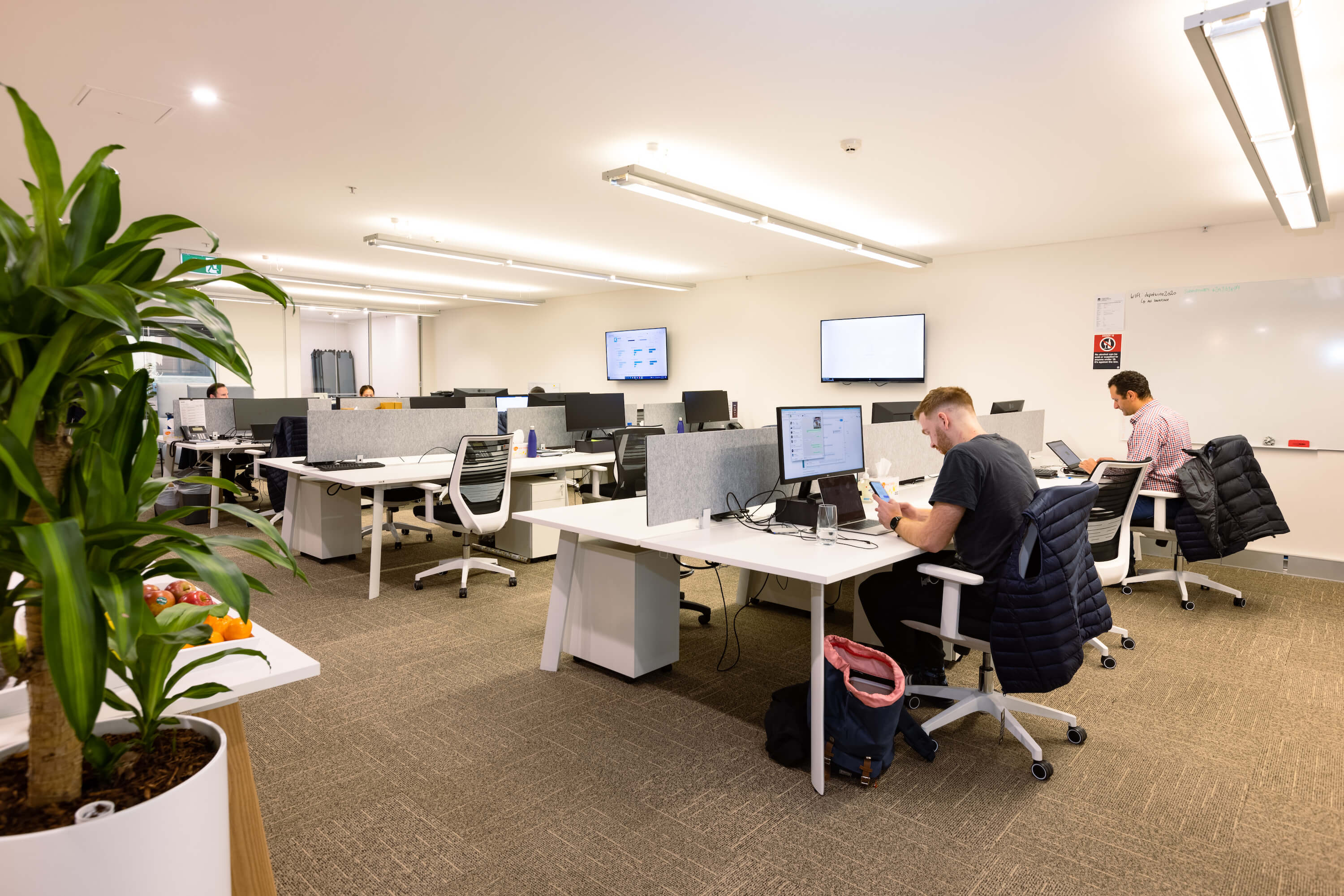
- Office fitout costs in Australia typically range from $600 to $2,500 per square metre.
- Furniture, construction, technology, and compliance requirements heavily affect total fitout pricing.
- SME businesses can reduce costs through staged upgrades, modular layouts, and stocked furniture solutions.
TL;DR
Office fitout costs in Australia depend on office size, location, construction scope, and furniture requirements. Most SME businesses spend between $600 and $2,500 per square metre for a complete workplace upgrade. Basic refreshes cost less, while premium custom spaces cost significantly more. Choosing stocked office furniture and practical layouts can reduce lead times, minimise disruption, and keep budgets under control.
What is the average office fitout cost in Australia?
Most Australian office fitouts fall into three pricing categories:
| Fitout Type | Typical Cost Per m² | Best Suited For |
|---|---|---|
| Cosmetic refresh | $600 - $1,000 | Small offices needing visual upgrades |
| Mid-range functional fitout | $1,000 - $1,800 | Growing SME businesses |
| Premium custom fitout | $1,800 - $2,500+ | High-end client-facing workplaces |
These costs generally include design, planning, flooring, finishes, electrical work, lighting, meeting rooms, partitions, furniture installation, and basic technology integration.
A small 100m² office could cost $60,000 for a simple refresh, $120,000 to $180,000 for a mid-range setup, or $250,000+ for a premium custom environment.
Businesses investing in full office fitouts usually prioritise operational efficiency, staff retention, acoustic performance, and hybrid work flexibility rather than appearance alone.
What factors affect office fitout costs?
Office size
Larger spaces usually reduce the cost per square metre because labour and project management costs spread more efficiently.
Existing condition of the space
A warm-shell tenancy with existing ceilings, lighting, and air conditioning costs far less to upgrade than an empty base-build office.
Furniture selection
Furniture quality significantly affects budgets. Standard office desks cost less than custom joinery, while modular office workstations reduce installation complexity.
Many businesses also include office chairs, office partitions, meeting tables, and power and data management.
Technology and infrastructure
Modern workplaces increasingly include video conferencing systems, acoustic meeting pods, smart lighting controls, sit-stand workstations, and integrated cable management.
Location
Sydney and Melbourne generally have higher labour costs. Brisbane and Perth can be slightly lower, while regional areas may incur higher freight and contractor travel costs.
How much does furniture contribute to office fitout costs?
Furniture usually represents 20% to 40% of the total office fitout budget.
| Furniture Category | Estimated Budget Range |
|---|---|
| Workstations | $1,200 - $3,500 per person |
| Chairs | $300 - $1,500 per seat |
| Meeting rooms | $3,000 - $15,000 |
| Reception area | $5,000 - $20,000 |
| Storage solutions | $2,000 - $10,000 |
Businesses can reduce costs by choosing stocked modular products such as height adjustable desks, ergonomic workstations, desk partitions, and office storage.
What does a typical SME office fitout include?
A practical SME fitout commonly includes open-plan desks, collaborative zones, quiet focus areas, storage units, video-call rooms, boardrooms, ergonomic seating, adjustable desks, charging access, cable management, and hybrid meeting capability.
Many businesses also invest in monitor arms and ergonomic accessories to improve workstation usability without dramatically increasing costs.
How can businesses reduce office fitout costs?
- Prioritise ergonomic seating, efficient layouts, acoustic control, and flexible workspaces.
- Use modular furniture systems that can scale as teams grow.
- Reuse existing storage, meeting tables, ceiling systems, and suitable flooring.
- Stage the fitout to reduce disruption and spread costs across quarters.
Why JasonL is trusted. Built for reliability. Delivered without delays.
Businesses planning an office fitout often prioritise speed, budget certainty, and minimal disruption. JasonL focuses on stocked commercial furniture and practical workplace delivery for Australian SMEs.
- Large stocked product range reduces manufacturing and procurement delays.
- Australia-wide delivery coverage supports multi-location business rollouts.
- Professional installation services simplify project coordination and setup.
- Typical stocked delivery timeframes range between 3-5 working days.
- Applicable products include a 10-year structural warranty for long-term reliability.
Businesses can also access workplace planning support, interior design assistance, flexible workstation solutions, collaborative furniture packages, and ergonomic workplace recommendations.
How JasonL compares to other suppliers. Clear differences. No noise.
Buyer decision snapshot
- Stocked furniture reduces waiting times and helps projects stay operationally flexible.
- Installation coordination matters more than product pricing alone during office upgrades.
- Modular systems simplify future team growth and workplace reconfiguration.
- Warranty coverage affects long-term replacement costs and maintenance planning.
- SME businesses benefit from suppliers experienced in staged fitout rollouts.
| Supplier Type | Product Availability | Delivery Speed | Installation Support | Workspace Planning | Warranty Coverage | Best Suited For |
|---|---|---|---|---|---|---|
| JasonL | Large stocked range | 3-5 working days on stocked items | Professional installation available | Yes | Up to 10 years structural warranty | SMEs needing speed and flexibility |
| Large national office supplier | Often mixed stocked and imported inventory | Variable lead times | Usually outsourced | Limited | Varies by manufacturer | Enterprise procurement environments |
Is an office fitout worth the investment?
For many SME businesses, yes - especially when the workspace affects staff retention, productivity, hybrid work capability, client presentation, and team collaboration.
The key is avoiding unnecessary overdesign and focusing on practical functionality.
Frequently asked questions
How long does an office fitout take in Australia?
Most SME office fitouts take between 4 and 12 weeks depending on complexity. Smaller cosmetic upgrades may finish faster, while construction-heavy projects involving walls, electrical upgrades, and approvals take longer. Furniture lead times also affect scheduling.
What is included in a commercial office fitout?
A typical office fitout includes design planning, flooring, lighting, electrical work, partitions, meeting spaces, furniture, and technology integration. Some projects also include branding, acoustic treatment, kitchens, and breakout areas.
Do office fitouts require council approval?
Some fitouts require building approvals or compliance documentation, particularly when structural works, fire systems, accessibility changes, or plumbing modifications are involved. Minor cosmetic upgrades may not require approvals.
Is it cheaper to refurbish an office instead of relocating?
Often yes. Refurbishing an existing office avoids relocation costs, downtime, and lease transition expenses. Many businesses improve functionality through better layouts, upgraded furniture, and technology improvements without moving premises entirely.
What is the most expensive part of an office fitout?
Construction and services upgrades are usually the largest expenses. This includes electrical work, HVAC modifications, glazing, ceilings, and custom joinery. Furniture and technology are significant costs as well.
Can office fitouts be completed in stages?
Yes. Many SME businesses stage fitouts to minimise disruption and spread capital expenditure over time. Common phased approaches include upgrading workstations first, then meeting rooms, followed by collaborative areas and reception spaces.
What office furniture should businesses prioritise first?
Businesses should prioritise ergonomic seating, functional desks, cable management, and collaborative meeting spaces. Products like standing desks and ergonomic seating often deliver long-term operational value.